

What is a Root Canal Treatment?
A Root Canal Treatment (also known as root canal therapy or endodontic treatment) is a specialised dental procedure designed to save a tooth that has diseased, inflamed, or dead nerves inside. This treatment is one of the most effective ways to relieve pain, stop infection, and preserve your natural tooth.
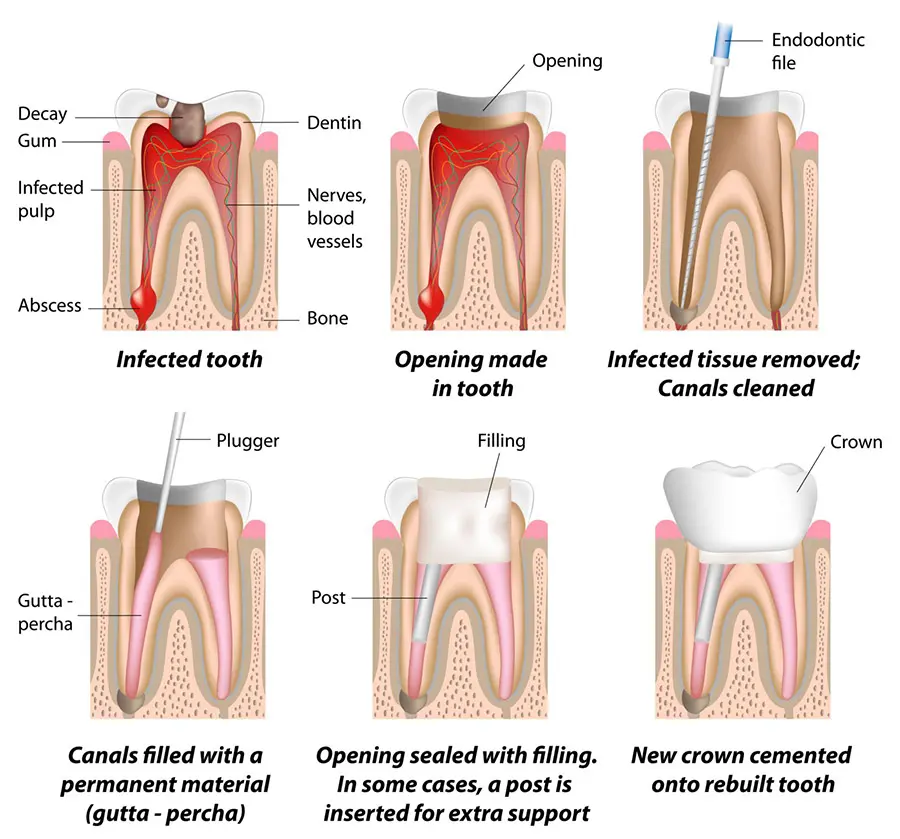
The process typically takes two to three appointments and involves carefully cleaning and shaping the tiny canals inside the tooth, removing bacteria and infected tissue, and placing medication to aid healing. In some cases—when there is no severe infection or major symptoms—your dentist may complete the root canal in a single visit.
Once the infection is cleared, the inside of the root is sealed with a special filling material to prevent future bacterial growth and protect the tooth. With proper care, a tooth that has undergone root canal therapy can last many years, allowing you to chew and smile confidently without pain.
Signs you might need Root Canal Treatment
If you’re experiencing persistent tooth pain (toothache), it could be a sign that you need a root canal treatment. A dull, throbbing toothache that won’t go away is one of the most common warning signs. You may also notice swelling in the gums, tenderness when chewing, or a visible abscess near the affected tooth. Hot or cold drinks can trigger sharp, lingering pain, and in many cases, the discomfort is severe enough to wake you during the night. Some people require constant pain relief medication just to manage it.
It’s important to note that not all severely infected teeth cause pain. In some cases, the tooth nerve may already be dead, meaning the infection can progress silently.
⚠ Don’t ignore the symptoms. Even mild tooth pain could be the start of a serious dental problem. When diagnosed early, treatment can often be simple and straightforward. But if left untreated, the infection can spread, causing the nerve to die and leading to more complex dental work — sometimes with a reduced chance of success.
The longer an infection remains in the tooth, the harder it becomes to treat. Early diagnosis and prompt root canal therapy give you the best chance of saving your tooth and avoiding further complications.
What to Expect During a Root Canal Treatment
If your dentist has recommended a root canal treatment, understanding the process can help ease any anxiety. A root canal is a common dental procedure designed to save a tooth that is infected, damaged, or has a dead nerve. The treatment is carried out in several stages:
Stage 1 – Open & Drain (Extirpation)
During your first appointment, we open the tooth to access the nerve chamber and assess whether the tooth is suitable for a root canal treatment. The inside of the tooth is cleaned, and a medicated dressing is placed to help control infection. In rare cases, we may discover issues such as a severe crack extending into the root, which could mean a root canal treatment is not possible.
Stage 2 – Chemo-Mechanical Preparation
If the tooth can be saved, we remove the dead, infected, or inflamed nerve tissue. The internal canals are carefully cleaned and shaped to eliminate bacteria. A specialised medication is placed inside the canals to continue disinfecting the area between visits.
Stage 3 – Obturation
Once the canals are fully cleaned, we fill them with a biocompatible material called gutta-percha. This seals the canals, prevents bacteria from re-entering, and protects the tooth from further infection.
Stage 4 – Dental Crown or Restoration
The most common reason for a root canal treatment to fail is tooth fracture. After a root canal treatment, teeth can become more brittle, so we strongly recommend protecting them with a dental crown, inlay, or onlay. This restores strength, seals the access point, and helps ensure long-term success of your treatment.
A timely root canal treatment can save your natural tooth and relieve pain, allowing you to eat and smile with confidence.
Are Root Canal Treatments Painful?
Modern Root Canal Treatments are designed to relieve pain, not cause it. In most cases, patients experience very little to no discomfort during the procedure. If there is mild soreness afterwards, it is usually well-managed with over-the-counter pain relief.
In rare cases, if the infection has been left untreated for too long and the tooth nerve is extremely inflamed, some discomfort may occur during the first appointment. This is why it’s essential to see your dentist promptly at the first sign of tooth pain — early treatment greatly improves comfort and success.
How Long Do Root Canal Treatments Last?
Studies show that Root Canal Treatments can last 7–10 years on average, but many last much longer with the right care. If you are in good health, maintain excellent oral hygiene (brushing and flossing daily), attend regular dental check-ups, and restore the treated tooth with a dental crown, your Root Canal Treatment can last decades.
The most common causes of failure are fractures of the tooth and new decay around the restored tooth, which allows bacteria to re-enter the root canal system.
What Are the Alternatives to Root Canal Treatment?
Alternatives to Root Canal Treatment are limited. They include:
- No treatment – which often leads to worsening pain, infection, and possible swelling.
- Tooth extraction – removal of the tooth, which will then require options like a dental implant, bridge, or denture to restore function and appearance.
Are There Any Complications with Root Canal Treatments?
As with any dental procedure, complications are possible, though they are relatively uncommon. These may include:
- Fracture or separation of the specialised instruments used to clean and shape the canals.
- Tooth fracture or cracking.
- Canals that are calcified (narrowed) and difficult to locate.
- Missed or untreated accessory (extra) canals.
- Perforation of the tooth during treatment.
- Referral to a root canal specialist (Endodontist) if complexities arise mid-treatment.
Some complications cannot be detected until treatment begins. However, the prognosis is significantly better when Root Canal Treatment is started early, before the infection has spread.
Trust our team for their honest assessment to see if your tooth is suitable for a Root Canal Treatment.
Common Dental Problems
Frequently Asked Questions
How much do Root Canals cost?
Root canals are complex dental procedures involving advanced equipment and multiple visits. The costs greatly vary between teeth due to the time required, complexity of the root system and number of roots. They can cost anywhere between $1,000 to $3,000 for an average tooth. The Dental crown is a separate cost to this.
Do you need to to refer me to a specialist to do my Root Treatment?
We do most Root Canals here at Dental at Keys. Occasionally due to the complex anatomical nature of your tooth, you may need to be referred to an Endodontist.
Do I need sleep dentistry for Root Canals?
It’s up to you! If you are anxious about dental treatment, sedation options like sleep dentistry might be a good option for you. If not, most of our procedures are done under local anaesthetic at our dental clinic.
Can I get my Root treatment done in one visit?
In some cases, we are able to do all stage of a root canal in one long visit. However, this is generally not always done due to certain medical risks such as large infections or complex tooth root systems