

Have you ever wondered what we could do to help with your bleeding gums? Read on to find out more about Gum disease Treatment:
Are you suffering from any of the below symptoms?!
Then you may HAVE or be at RISK of GUM DISEASE!
Gum Disease, otherwise known as Periodontal disease is defined as inflammation of the gums.
If left untreated, gum disease may cause teeth to become loose and therefore result in tooth loss….😱🦷
Attending to 6 monthly maintenance visits, in conjunction with at home oral hygiene eliminates your risk of developing gum disease.
Causes:
Possible Gum disease Treatment:
*In cases where significant bone loss accompanies the gum infection, additional intervention for gum treatment may become necessary.
Contact us now to ensure that your gum disease doesn’t get worse and that it is treated early!
.
.
.
#dentalatkeys #dentalfacts #oralhealth #melbournedentists #australia #healthcareprofessionals #dentists #periodontitis #gumdisease #brushing #dentalvisits #teeth #flossing #maintenancevisits #bleedinggums #toothloss
Keen to know some Brushing tips to help improve your Oral Hygiene? Read below to find out more:
FALSE FACT:
Excessive over brushing or brushing too hard DOES not mean you are cleaning better.
This can cause damage to your teeth by eroding the hard enamel that protects the inside of the tooth from cavities and decay.
Here are some good tips:
Remember, Prevention is key!
Contact us now to find out more on how we can help you with some innovative brushing tips!
SWIPE right for the dental approved method on brushing 🪥😁👍
.
.
.
#dentalatkeys #keysborough #dentaltips #mondaymyth #dentalfacts #oralhealth #oralcare #dentalcare #healthcareprofessionals #dentists #brushingtips #teeth #preventativecare
Have you ever wondered why people talk about Sleep Dentistry?
Wouldn’t it be great to go to sleep at the dentist, and wake up to find that all your dental work is completed without you remembering the whole experience?
You hear this term a lot lately, on the radio, at dentists and on Facebook! What does this mean? Does it mean you’re so calm at the dentist that you fall asleep? Although that does happen sometimes, that’s not exactly what it means.
Some of you may be too nervous to get treatment done in the chair. This could be due to previous bad experiences from when you were young or just an unknown fear.
At Dental at Keys, we offer both options! Our in-house service is supported by visiting Sleep Experts.
If you have any questions or are interested in this service, contact us now by calling us, emailing or booking online.
We usually recommend a comprehensive consult including x-rays to determine what is required. We can then proceed to give you a treatment plan and liaise with the Sleep Expert to organise appointments for you. Experience the best of Sleep Dentistry in Keysborough with Dental at Keys.
Sweet dreams!
Most of our patients always look at us blankly when we talk about a dental crown. The one thing they all know about crowns is – “They’re expensive aren’t they?”
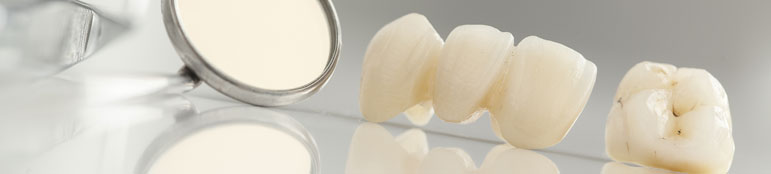
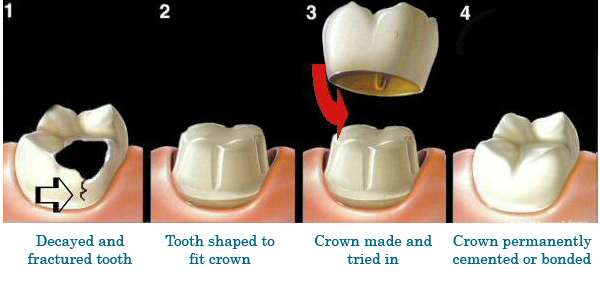
Dental Crowns or caps (as some people call them) are a custom made covering for your tooth. There are many materials used to make crowns, the most common ones are ceramic, porcelain and gold.
Why does my tooth need a crown?
What’s involved?
A Dental crown is typically done in 2 stages.
Stage 1
Stage 2 (approx. 2 weeks later)
Benefits of a crown:
Why does it cost so much?
It is mainly due to the materials cost, time and there is an additional lab component to be paid as well. A large filling that breaks continually will need to replaced very often, the summative costs of replacing/repairing the filling every time may be even more than getting a crown done.
Best thing to do is rather than wait for the filling/tooth to break, get a crown done to protect it before this happens. If you wait for it to break, you may lose more tooth and it might get to the point where even doing a crown may not be possible.
You can plan treatment like this with your dentist so you can figure out the best way to move forward.
As always, if you have any further questions feel free to contact us to check if your tooth needs a crown.

When you go the dentist for a check-up or some other concern, more than often the dentist has asked to take Dental X-rays.
A lot of the times you are wondering, “Why?”
Unfortunately, dentists aren’t born with X-ray vision (hopefully someone is working on this!) and when we have a look at your tooth, we can only see the exposed areas of the tooth. There have been cases where we have checked the teeth and it looks great and X-rays tell another story! Cases like those, if we didn’t take x-rays, then you wouldn’t have found those problems and fixed it when they were small.
We are not able to see the sides of the tooth where it is touching the other teeth, we are not able to see under old fillings and we cannot gauge the depth of decay/filling. We are also not able to see roots of teeth and the bone around the tooth. Because of this, X-rays are a great way to get a clearer picture of what is happening to your teeth.
Are you are worried about radiation exposure? We can reassure you that dental X-rays are perfectly safe to get done and are very low in radiation exposure. The new digital x-rays are great for this purpose! It is also safe for pregnant women to get x-rays done as well.
Some useful radiation dosage chart information can be found here. Did you know that eating 5-10 bananas gives you the same radiation as one dental X-ray?
So the next time you need an x-ray, don’t be worried and if you are, talk to your dentist about it and they can explain why it is required. If you have regular check-ups and cleans with the dentist, then you usually only need x-rays repeated every 2 years. If you are at a higher risk of developing dental problems then you may need them more often (6/12/18 monthly).
If it has been a while since your last check-up and there are many concerns, you will usually require a full set. The big dental X-rays (e.g. OPG), need to be done every 5 years (or more often depending on your situation) as part of a general screening and also a useful oral cancer check. We have an OPG x-ray machine on site here at Dental at Keys so it makes it easy to get it all done too!
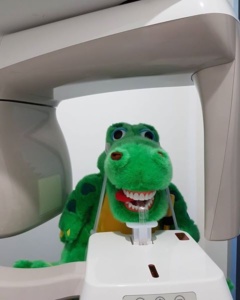
Dino taking his routine OPG x-ray!
Clear aligners are an invisible and simple alternative to braces. A few brand examples include Invisalign, Spark and Angel Aligner.
It’s a series of clear, custom-made, removable aligners that gradually straighten your teeth as you wear them, each aligner moving your teeth just a little bit at a time. This movement is so small that most patients who wear aligners will only find them uncomfortable for the first few days of wear (of each tray).
They’re practically invisible, so most people won’t even know you’re in treatment, they fit around your teeth perfectly, so are usually more comfortable than regular braces, and they’re removable, so you can eat whatever you like and clean your teeth normally.
No, it’s not magic – invisible braces are a term we dentist use to describe Clear Aligners – which is a form of Orthodontic Treatment – and are not braces AT ALL! Sadly, they are not invisible per se – but they are close to invisible as one could be!
Here at Dental at Keys – we offer aligners to those who wish to straighten their teeth – but without the look of those pesky tiny rectangular braces that you normally see in kids! In fact, they are so invisible we bet you didn’t notice it on one of our nurses – Tamsin!
In fact, these clear aligners is the most popular way for our adult patients to straighten their teeth. We use a variety of system including Invisalign™ and Spark™.
If you are interested – all you have to do is contact us by calling or emailing so we can have an assessment of your teeth to see if you are suitable!
To our lovely community of patients,
Thought this would be a good time to update you on the recent developments surrounding COVID-19 (Coronavirus).
We are still open and seeing patients and will continue to follow direction from the relevant Health Authorities.
Please be advised, we are continuing to adhere to the strictest infection control measures and have added some additional measures that you may notice when you visit us.
In the interest of your safety and our practice and patient safety, please read through the follow questions and give us a call ASAP if you have answered ‘YES’ to any of the following.
Thank you for your help and understanding to ensure optimum patient safety.
Nearly all of us have heard about how the teeth suffered after a pregnancy, so what does this mean?
Firstly, congratulations on your pregnancy! It is a tricky time since you have so many things to be mindful of.
On a teeth & oral health level, rest assured most things will be the same.
Teeth and Pregnancy itself is not a huge risk factor for your teeth developing problems. There are a few things to monitor while pregnant:
Things to note
Visiting the dentist
The main thing I’ve found is that new mums are tired with so much to do and the lack of sleep, it’s hard to look after yourself properly. So don’t forget about your own health and wellbeing along with your baby 🙂
As always, contact us here and give us a call or book online to discuss further.
Heard about a Dental implant but not sure what it is? To put it simply – dental implants are special titanium cylinders that are placed in your jaw which allow us to replace missing teeth.
Dental Implants are specially manufactured root replacements for a tooth/teeth. They are usually made of titanium, which is an excellent material at sticking to bone (just like hip and joint replacements!). Implants are usually shaped like a screw and are placed in the jaw where the missing tooth is. A special customised crown is then attached to the top of the implant. The finished product is almost exactly like a new tooth, albeit without the sensitivity!
When would you need a Dental Implant?
Implants are a great option to replace missing teeth. There is no need to remove it every night like a plate/denture and it is cleaned normally just like any other tooth in your mouth. Implants can be used to replace a single missing tooth or multiple missing teeth. In more complex cases, a group of 4 or more implants can be used to replace an entire jaw of missing teeth.
How is a Dental Implant fitted?
Firstly, your health will have to be assessed to see if you are a suitable candidate for implants. You should be in good health, have no gum disease and have a suitable amount of healthy jawbone. Secondly, special 3D x-ray scans of your jaw are done to determine the optimum position of the implant. In some cases, we may take a few moulds of your teeth for a construction of a special 3D printed surgical stent. This advanced technology allows extremely accurate positioning of the implant in your jawbone.
The implant is then surgically placed in the jaw bone where the tooth once was. Depending on the quality of the bone, the implant may be left to integrate for a period of 2 to 6 months. Once the integration process is finished, moulds of your teeth are taken and a special customised crown is constructed and screwed or cemented in. If you are missing all your teeth in your jaw, a special full arch denture is made and screwed onto digitally designed titanium strengthening bars.
How long do Implants last?
There are many variables for this. Generally, studies have shown a 97% success rate over 15 years. If you are healthy and have good oral hygiene (ie. you brush and floss well), you can expect them to last a long time. However, that said, some patients despite all of this, still have complications with their implants.
Are there any complications?
As with any dental treatment, some patients have experience complications. Whilst implants have a great success rate, implants can still fail on even the healthiest patients. Implants are not immune to gum disease and if proper checks and cleans are not done on a regular basis, the implants can get infected causing their eventual failure (peri-implantitis). On rare occasions implants can also fracture if there is heavy grinding happening at night. Small amounts of bone loss around an implant is a fairly common complication however if it is managed well, it may affect the integrity of the implant system.
If you are interested in Implants or want to know more – why not give us a call to speak to one of our lovely staff to find out more? Contact us here.
Gum disease, also known as periodontal disease/periodontitis is a chronic infection of the gums and bone around the tooth. This results in bone loss around the tooth root.
Signs of gum disease (not a definitive list):
Some of these symptoms can also mean other problems so don’t self-diagnose!
The key with treatment of gum disease is that there is no quick cure. It is something that requires ongoing management.
There are many treatment options and as with anything, the key is to come in as soon as possible for treatment. The longer you wait, the more likely it will become severe and you will end up losing teeth.
The treatment you require really depends on the severity of the gum disease. Usually you will need a full measurement of your gum and bone height + a full mouth X-ray (called an OPG). Subsequently, we perform a deep clean called ‘Root-planing’. This is done under a local anaesthetic so we can clean under the gums well and return the tooth to a healthy state.
After this, we need to review your gums and see if it is responding to treatment. If it is healing well, we monitor you every 3 months and do a check-up and clean. It is very important to maintain this otherwise it will worsen.
If things are not stable- we may need to look at gum surgery or other interventions.
Gum disease is something that can lie dormant with no symptoms for a long time so ensure you get your teeth checked regularly to avoid losing teeth!
Contact us by Calling us now or booking online to discuss any concerns you might have!