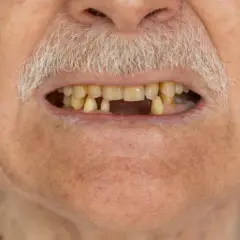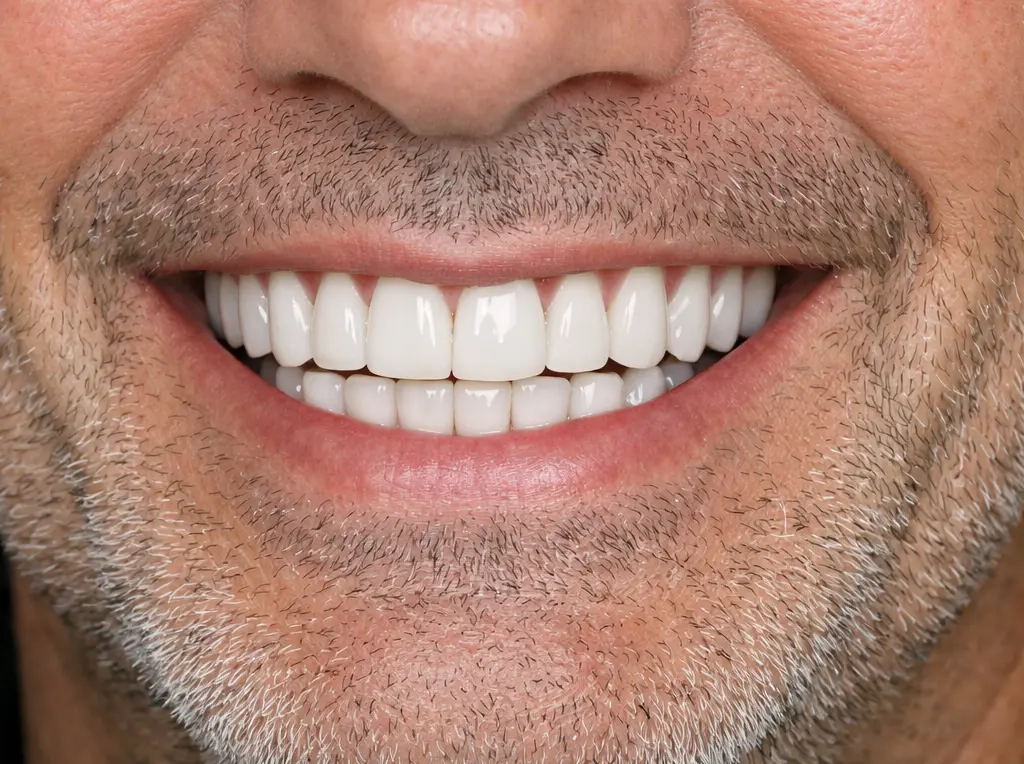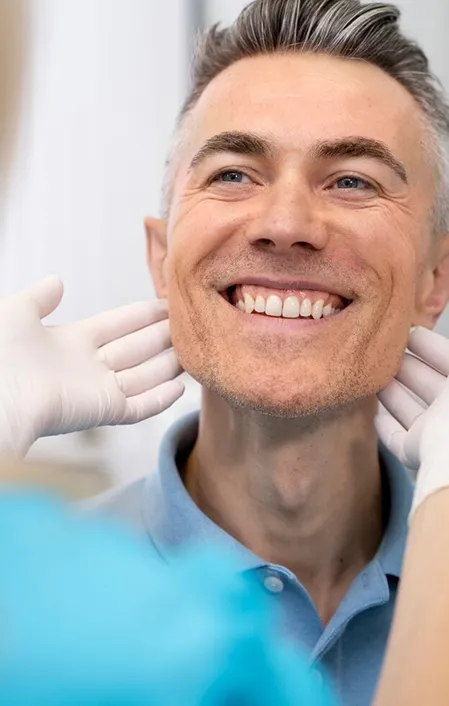
smiling older man with tooth dental bridge

What is a Tooth Bridge?

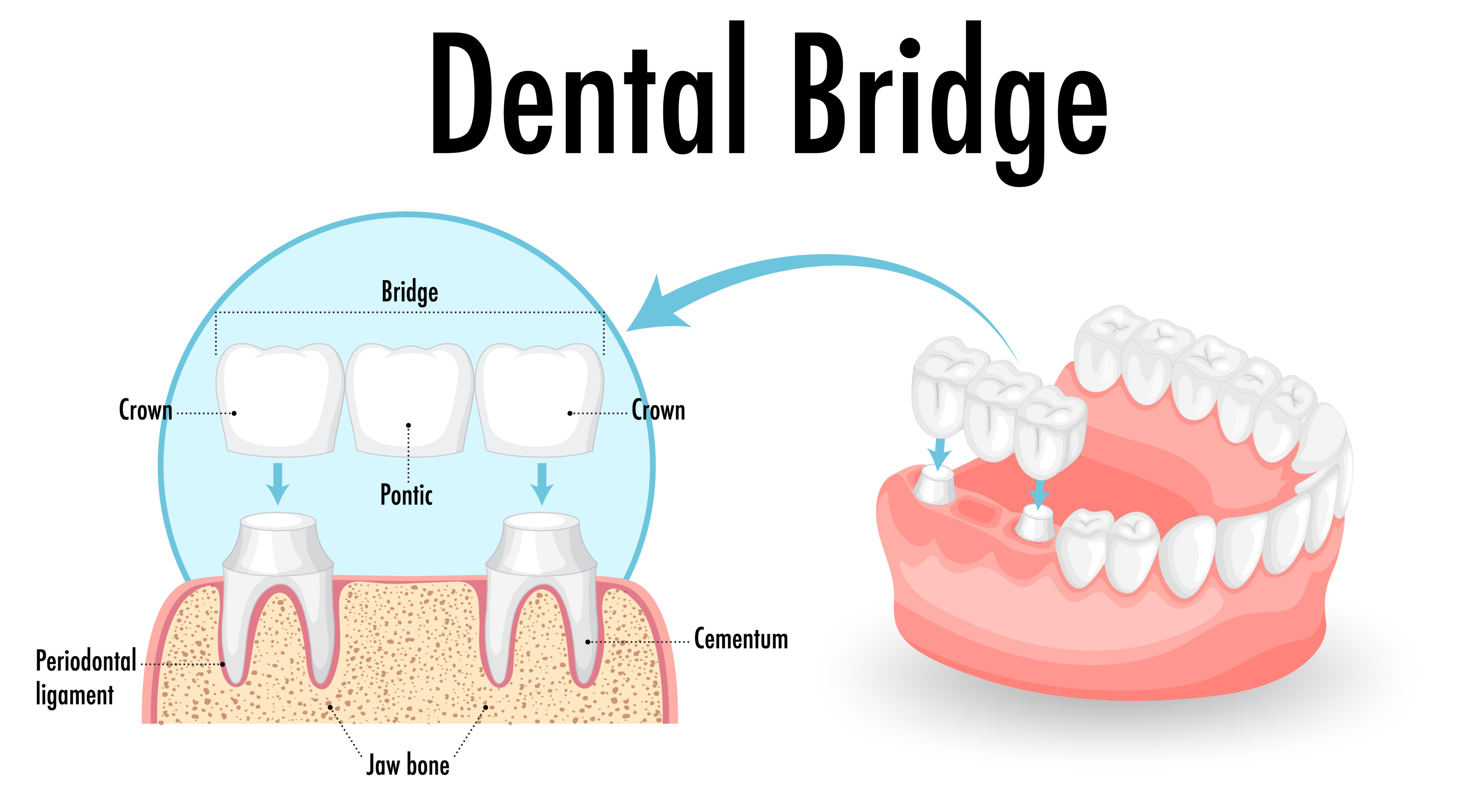
Dental bridges are multiple crowns fused together to replace one or more missing teeth. They can protect adjacent damaged or heavily filled teeth while restoring your smile and bite function. Bridges can be made from materials like porcelain, ceramic, or gold alloys.

Modern techniques using 3D scanning and milling now allow for durable, natural-looking all-ceramic bridges without metal.

When would I need a tooth bridge?

Tooth Bridges are usually recommended when one or more of the following happens:

  • Missing one or several teeth.
  • The missing tooth cannot be restored with a dental implant.
  • The teeth adjacent to the empty space are cracked, decayed, weak, heavily filled, discoloured or have had a root canal.
  • You want a fixed (not removable) solution to replace your missing teeth and do not want dentures.

What type of materials do you use for a dental bridge?

Dental bridges can be made out of the following in order of popularity:

  • Monolithic Zirconia (Ceramic) – Zirconia has excellent compressive strength and wear ratings.
  • Lithium Disilicate (Ceramic) – Also known as E.max (trade name), this ceramic materials is extremely popular due to it’s superior tooth-like aesthetics and ability to be bonded onto teeth.
  • Porcelain fused to Metal (PFM) – The traditional way to make crowns and bridges, with excellent long-term studies to prove its reliability.
  • Porcelain fused to Zirconia (PFZ) – A fusion of the traditional way to bond porcelain using a new-age ceramic as the strong base.
  • Gold and metal alloys – All metals have excellent compressive strength and wear ratings. These are the material of choice in heavy teeth grinders.
  • If dental implants are involved, the connection material to the dental implant is usually made out of Zirconia or Titanium.
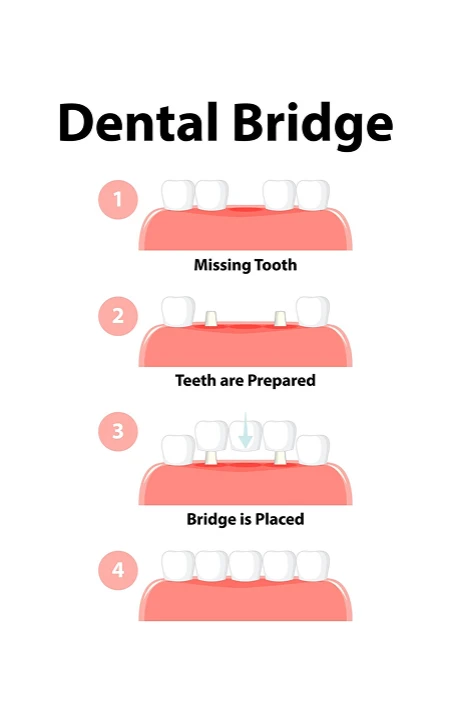
dental tooth bridge infogram
Infographic Of Human In Dental Bridge On White Background

Teeth bridging procedure

The steps for a successful dental bridge are as follows:

  • A full comprehensive oral examination is performed and all your teeth are checked for problems.
  • All teeth problems such as cavities, infections, gum disease are all fixed prior to the bridging process.
Dental Bridge connected to Teeth
  • The teeth connected to the dental bridge are prepared (adjusted) and moulds or 3D scans are taken and sent to our local dental lab.
  • For Maryland Bridges – minimal preparation is required. Read more here.
  • Your new custom tooth bridge is either milled or constructed and sent back to us in roughly two weeks.
  • Your new dental bridge is bonded onto your teeth.
  • The implants are 3D scanned or impressions are taken and sent to our local dental lab.
  • Specialised custom Dental Implant components need to be ordered for each different bridge.
  • Your new custom implant bridge is either milled or constructed (or both!) and sent back to us in roughly three weeks.
  • Your new implant bridge is screwed onto your implants.

Alternative treatment options for Dental Bridging

It’s important to note that you do not always need a bridge and there are many other alternatives:

Possible complications

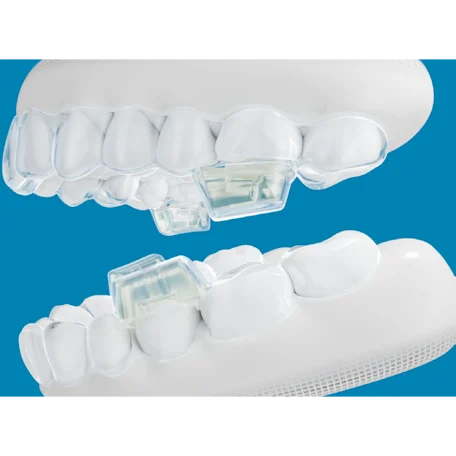
As with any dental treatment, some patients may experience complications. Nerve death and a subsequent need for a root canal occurs in roughly 10-20% of crown and bridge cases. This is mainly due to the fact that when teeth require dental bridging, it is already fairly broken down due to decay or cracks. Others may experience porcelain chipping or even porcelain fracture. In such cases, repair is not possible and replacement of the bridge may be required. The tooth is not immune to decay even with a bridge and hence it is recommended that it is checked and cleaned on a regular basis. Patients who grind their teeth still require a night splint to protect their dental bridge. All dental restorations have a limited life-span and will require eventual replacement.

Contact Dental at Keys to see if you missing tooth is suitable - there are numerous options available.

Common Dental Problems

Tooth Decay
Tooth decay or (cavity), is the unsightly brown or black spot on your tooth. Addressing it promptly is essential as it can often lead to further progression of the decay into the tooth.

Toothache
A toothache is pain in or around a tooth that can range from mild discomfort to severe, throbbing pain. It often signals an underlying dental problem that needs urgent professional attention.

Sensitive Teeth
Refers to a condition when a person experiences sharp, sudden pain or discomfort in their teeth when exposed to certain triggers.

Impacted Wisdom teeth
Impacted Wisdom teeth are your last (third) molars which stuck and can't come out due to their poor angulation. Signs include pain, swelling, infection, and headaches.

Teeth Grinding
Teeth grinding (bruxism), is a common condition where patients unconsciously clench, grind, or gnash their teeth together.

Tooth Abscess
A tooth abscess is a localised collection of pus caused by a bacterial infection inside the tooth or surrounding gum tissue. It often leads to intense pain, swelling, and requires prompt dental care to prevent further complications.
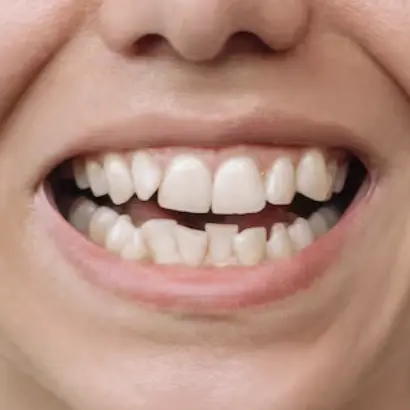
Crowded Teeth
Crowded teeth occur when there isn’t enough space in the jaw for teeth to sit in proper alignment.

Crooked Teeth
Crooked teeth usually develop due to a narrow or restricted jaw that doesn’t provide enough space for teeth to fit correctly.
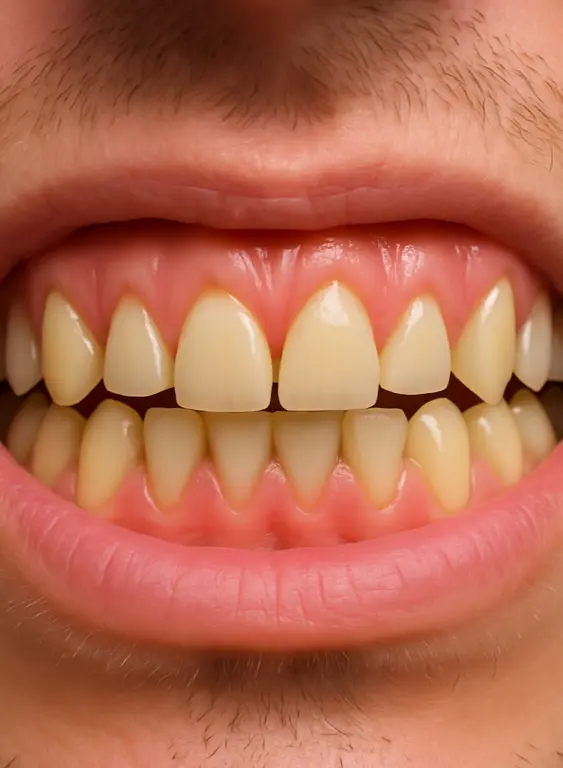
Yellow Teeth
Many people feel self-conscious about yellow teeth or tooth discolouration as it can affect confidence, self-esteem, and appearance.
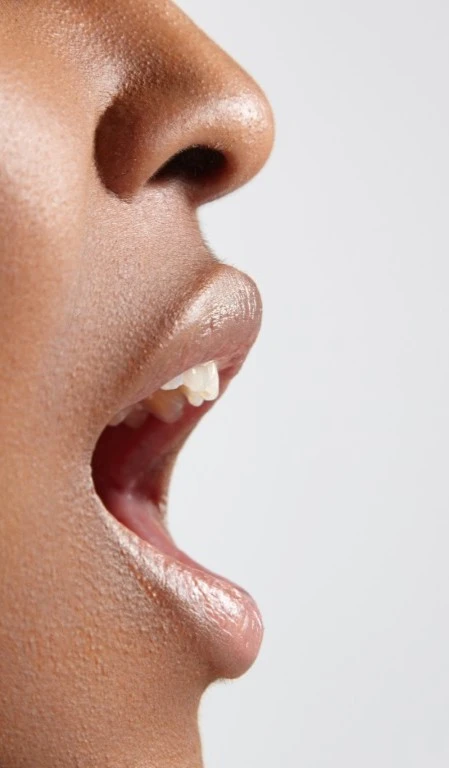
Bad Breath
Bad breath, is a common yet often embarrassing condition that can affect your confidence and social interactions. It may indicate an underlying dental or medical problem that needs attention.
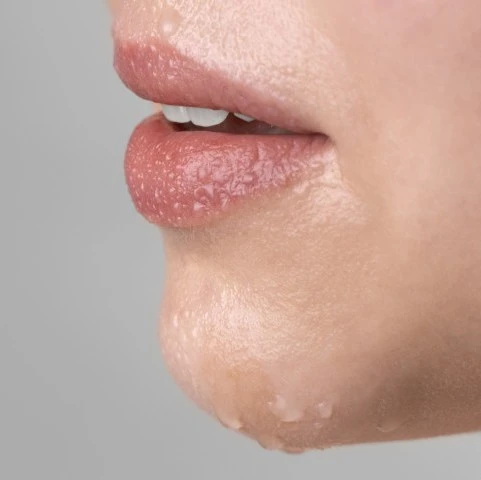
Dry Mouth
Dry mouth, also known as xerostomia, occurs when your salivary glands do not produce enough saliva to keep your mouth moist.

Snoring
Snoring, despite popular belief, is NOT a normal part of sleep. Snoring indicates that the flow of air through the breathing pipes is being restricted, causing vibrations and noise.
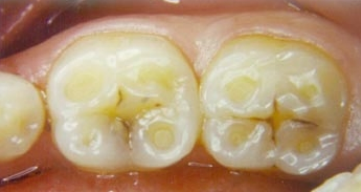
Enamel Erosion
Enamel erosion occurs when acids wear away the strong outer layer of your teeth leading to tooth sensitivity, cosmetic changes, and even functional damage.

Jaw Pain
Jaw pain is a common but often overlooked dental and medical issue which requires early treatment to prevent deterioration of symptoms.

Gum Infection
Gum infections are painful and can cause redness, swelling, bleeding, and pus around the gums.
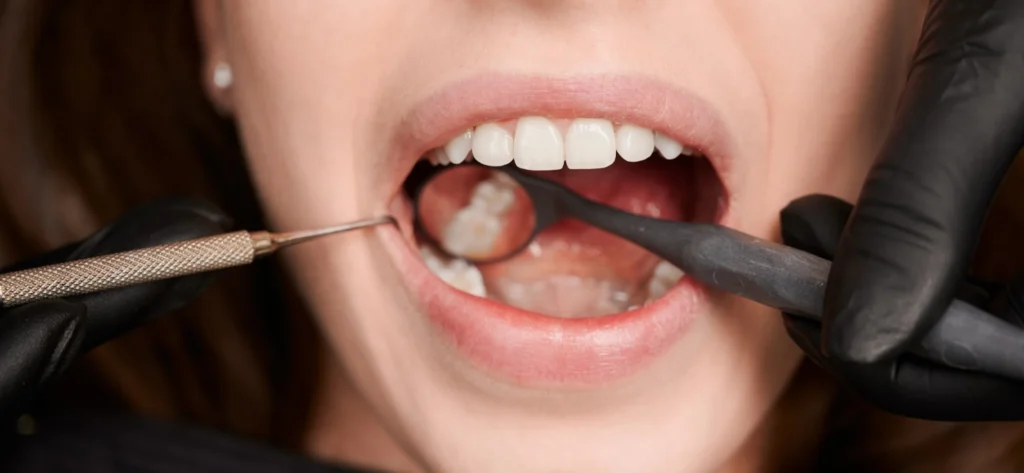
Receding Gums
Receding gums can be worrying when you first notice them. Seeking help early is the best way to protect your teeth and gums from further damage.
Gingivitis
Gingivitis is the reversible inflammation and infection of the gums surrounding the tooth. It is caused by plaque and/or tartar build-up around the teeth.

Cracked tooth
A cracked tooth refers to a condition when a tooth has chipped or fractured which generally results in a "sharp tooth" or at worst, a "tooth ache". Cracks can vary in size, depth, and location, impacting the tooth's structure and overall integrity.

Root Canal Infection
A root canal infection happens when bacteria enter the inner part of a tooth, called the pulp - and can be extremely painful.

Dental Anxiety
Are you scared of the dentist? Do you think you need a lot of work done but can't bear to be in the dental chair?


Frequently Asked Questions

Faq Img
How much does a Dental Bridge cost?

The cost of bridging your teeth will greatly depend on the material and number of teeth you are bridging. A typical Maryland Bridge will cost the same as a tooth crown and a 3-unit bridge can cost up to 2-3x the cost of a dental crown.

There are many variables for this. Generally, studies have shown crowns and bridges to last around 7–15 years.

The best way to clean a bridge is to brush it normally, then use super-floss to clean under the pontic. If super-floss is not available, we recommend the use of a water-flosser to remove debris.

Latest News

Your local Dentist in Keysborough
A Smile For Every Age