

Enamel hypoplasia is a condition where the protective outer layer of the tooth, known as enamel, does not fully develop. This results in areas of the tooth having reduced enamel thickness or missing enamel altogether.
Although often confused with enamel hypomineralisation, the two conditions are different:
The condition may affect a single tooth or several teeth and can occur in both children and adults.
Enamel hypoplasia develops while teeth are forming beneath the gums. In many cases, there is no single identifiable cause, however several factors may contribute to disrupted enamel development.
Potential causes include:
The severity of enamel hypoplasia can vary significantly. At times it can be only a single tooth affected and other times it can affect all the teeth that form at a particular time period.
Teeth affected by enamel hypoplasia can look and feel different from healthy teeth. Symptoms may range from mild cosmetic changes to significant enamel defects.
Common symptoms include:
Adult front teeth and first molars are commonly affected or primary 2nd molars.
Treatment for enamel hypoplasia focuses on protecting weakened teeth, improving appearance and preventing further damage.
Depending on the severity of the condition, treatment may include:
Some mild cases may only require regular monitoring and preventative care.
Your dentist will recommend the most suitable treatment based on the location and severity of the enamel defect.
Good oral hygiene and preventative dental care are important for maintaining teeth affected by enamel hypoplasia.
Helpful recommendations include:
Early treatment can help reduce the risk of decay, discomfort and long-term tooth damage.
If you are considering Enamel Hypoplasia treatment, contact Dental at Keys today to book a consultation and discuss whether this option is right for you.

Yes. Once the tooth has formed with reduced enamel, the enamel cannot naturally regenerate. Dental treatments can help strengthen and restore the affected teeth.
Yes. Teeth with thin or missing enamel are more vulnerable to bacteria, cavities and wear.
No. The condition develops during tooth formation but may affect both baby teeth and adult teeth.
Some cases are linked to inherited genetic conditions such as Amelogenesis Imperfecta, while others are caused by environmental or developmental factors.
At Dental at Keys, we understand that some patients require additional support to undergo dental treatment comfortably and safely. General anaesthetic for dental procedures allows you to be fully asleep while treatment is performed, either in a hospital, at our practice or accredited day surgery facility.
Unlike IV sedation, a dental general anaesthetic places you in a deep state of unconsciousness and requires breathing assistance from a specialist anaesthetist throughout the procedure.
Our team only recommends general anaesthetic dental treatment when it is clinically necessary or when it represents the safest and most appropriate option for complex care.
Most dental procedures can be completed comfortably using local anaesthetic or IV sedation. However, in certain circumstances, a general anaesthetic dentist referral may be recommended to ensure optimal safety, comfort and treatment outcomes.
Common reasons for requiring general anaesthetic in dentistry include:
Young children or patients with special needs who cannot tolerate dental treatment (often requiring referral to a dental specialist)
Severe dental anxiety or dental phobia
A pronounced gag reflex that prevents safe treatment
Complex oral surgery such as dental trauma, jaw fractures, bone grafting or advanced implant procedures
Medical conditions that require dental treatment in a hospital environment
Surgical removal of impacted wisdom teeth close to the jaw nerve
If you think you may need general anaesthetic for dental work, the first step is a comprehensive consultation at Dental at Keys. This includes a thorough examination, diagnostic X-rays and a personalised treatment plan.
Your dentist will carefully review:
Your dental needs
Your medical history
Your anxiety levels and comfort preferences
We will discuss all suitable options, including local anaesthetic, IV sedation or general anaesthetic, so you can make an informed decision.
If a dental general anaesthetic is recommended, we will arrange a consultation with an experienced specialist anaesthetist. They will assess your suitability, review your medical history and explain the process in detail.
Once approved, your treatment will be scheduled at either our practice, a hospital or accredited day surgery facility.
The total cost of dental procedures performed under general anaesthetic may include:
Dental treatment fees (may be claimable through private health insurance)
Specialist anaesthetist fees (may be partly claimable through Medicare)
Hospital or day surgery facility fees (depending on your Medicare and health fund cover)
Coverage depends on your individual health fund policy, the type of treatment required and your clinical circumstances.
Once your treatment plan and item numbers are confirmed, our team at Dental at Keys can assist you in obtaining estimates and understanding potential rebates.
Because of the specialised facilities, medications, equipment and highly trained medical team involved, general anaesthetic dental treatment is usually more costly than procedures performed with local anaesthetic or IV sedation.
If you are considering general anaesthetic for dental treatment, contact Dental at Keys today to book a consultation and discuss whether this option is right for you.
Most dental implant procedures are comfortably performed under local anaesthetic. A general anaesthetic for dental implants may only be recommended for patients with severe anxiety, specific medical conditions, or when extensive bone grafting or complex surgery is required.
Yes. Dental general anaesthetics are widely used and considered very safe when carefully planned. A specialist anaesthetist will thoroughly review your medical history to minimise risks and ensure the safest possible outcome.
Recovery varies between patients, but most are monitored for several hours after treatment and can go home the same day. You may feel drowsy, tired or mildly nauseous and will need a responsible adult to escort you home.
No. You will receive strict fasting instructions prior to your procedure. Avoiding food and drink for several hours beforehand is essential for your safety and to reduce the risk of complications during the anaesthetic.
Full mouth crowns may be recommended for patients whose teeth have undergone extensive dental work over time, or where teeth are heavily filled, worn, cracked, or broken down. This treatment involves carefully preparing the affected teeth and restoring them with crowns to help rebuild tooth structure and improve function for chewing and biting.
Full mouth dental crowns are commonly performed as part of a full mouth rehabilitation following comprehensive assessment and planning.
Not everyone requires full mouth crowns. A detailed examination of your teeth, gums, bite, and overall oral health is essential to determine whether this treatment is appropriate.
Full mouth crowns may be considered in cases such as:
Your dentist will assess whether full mouth crowns are necessary or if alternative treatments may be more suitable.
Full mouth crown treatment requires careful planning and multiple stages to ensure long-term function and comfort.
This includes:
If treatment is recommended:
After treatment, it may take time to adapt to the new bite. Your dentist may recommend a night guard to help protect your crowns, particularly if you grind or clench your teeth.
The cost of full mouth crowns varies depending on:
This type of treatment involves multiple appointments and extensive planning. As a general guide, crowns, onlays, or veneers typically range from $1,300 to $2,000+ per tooth, depending on the material used. Gold crowns are usually more expensive due to the cost of gold.
A personalised treatment plan and cost estimate will be provided following assessment.
Maintaining excellent oral hygiene is essential after complex dental treatment. Although crowns cover the teeth, the underlying tooth structure is still present and can be affected by decay or gum disease.
To care for your crowns:
Poor oral hygiene can lead to decay at the crown margins and gum disease, which may cause gum recession and expose crown edges. Your dentist may recommend additional cleaning aids to support long-term maintenance.
Are you looking for a new smile to replace your old, worn-out, discoloured teeth? Consider this treatment as possible option.
Treatment is performed under local anaesthetic, so procedures are not painful. Some discomfort or sensitivity afterwards is normal and usually manageable with over-the-counter pain relief.
Because this treatment may alter your bite, an adjustment period is expected. Eating softer foods initially can help during this time.
Depending on your situation, alternatives may include:
In cases involving extensive wear or cracking, these materials may not be strong enough long-term. If a tooth fails due to structural damage, options such as dental implants or removable dentures may need to be considered.
Your dentist will discuss all suitable options with you based on your oral health needs.
The lifespan of full mouth crowns varies depending on factors such as oral hygiene, bite forces, material choice, and regular dental maintenance. With good care and routine dental visits, crowns can last many years. Wearing a night guard (if recommended) and maintaining excellent oral hygiene can help reduce wear and protect your restorations over time.
Enamel microabrasion is a minimally invasive cosmetic dental procedure used to reduce the appearance of white or brown discolourations on the enamel of teeth. The technique involves gently removing a very thin surface layer of affected enamel to improve the uniformity of tooth colour and surface texture.
This treatment is most effective for mild to moderate enamel defects and may be recommended after a thorough dental assessment.
White or brown enamel discolouration (also known as hypomineralisation) can develop for several reasons. In some cases, the exact cause is unclear, but contributing factors may include:
The most common sign is the appearance of white spots, brown spots, or a combination of both on the teeth. These areas may appear patchy, irregular, or uneven in texture.
In most cases, the affected teeth are not painful; however, some patients may experience tooth sensitivity, particularly to cold food and drink. More severe cases may present with darker brown or grey banding across the teeth.
Enamel microabrasion works best for surface-level enamel defects. In cases where discolouration extends deeper into the tooth, alternative treatments such as resin infiltration may be more appropriate and less invasive.
Your dentist will determine the most suitable option following assessment.
Enamel microabrasion is only performed once your overall oral health is stable. In some cases, tooth whitening may be recommended prior to treatment. If whitening is completed, a waiting period of approximately two weeks is usually advised before proceeding with microabrasion.
The procedure typically involves:
Temporary tooth sensitivity may occur after treatment. Your dentist may recommend a desensitising toothpaste or topical remineralising agent to assist recovery.
Once enamel microabrasion is completed, repeat treatment is usually not required. Long-term results are supported by good oral hygiene, including:
If enamel sensitivity is present, a sensitive toothpaste or a CPP-ACP remineralising cream may be recommended.
Are you worried about those brown and yellow stains on your teeth? Ask us today how Enamel Microabrasion can help!
Results are generally long-lasting, provided good oral hygiene is maintained and the discolouration was limited to the enamel surface.
When performed on suitable cases, enamel microabrasion is considered a safe and conservative treatment. Temporary sensitivity is the most common side effect. Proper case selection is essential, as deeper stains may require alternative treatments.
The cost depends on the number of teeth treated, the size of the affected areas, and how many application cycles are required. A personalised cost estimate will be provided following clinical assessment.
Early orthodontic treatment can have a lasting impact on your child’s bite, jaw development, and facial balance. The Invisalign Mandibular Advancement System is a modern solution for children with developing overbites, offering a comfortable and discreet alternative to traditional functional appliances.
At Dental at Keys, we provide advanced early orthodontic intervention to guide jaw growth and reduce the need for complex treatment later in life.
This treatment is most effective for growing children aged 9 to 14, when jaw growth is still active.
Your child may benefit if they have:
A noticeable overbite
A small or retrusive lower jaw
Difficulty biting or chewing
Crowded or misaligned teeth
Early signs of jaw imbalance
Treating these issues early can reduce treatment time later and lower the risk of extractions or jaw surgery.
Invisalign Mandibular Advancement works in two ways at the same time:
Special features in the aligners guide the lower jaw forward in small, controlled steps, encouraging healthier jaw growth. This is known as functional therapy.
At the same time, the aligners gradually move the teeth into better alignment.
This dual approach makes it an efficient option for Class II early treatment.
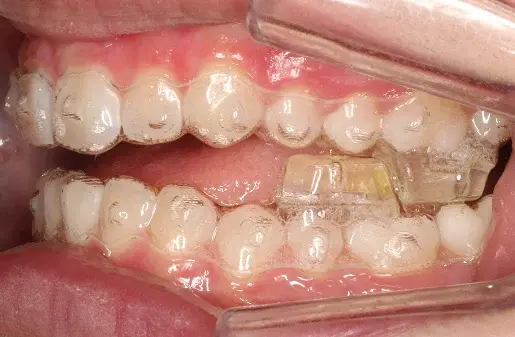
There is now a new version of Invisalign Mandibular Advancement that includes occlusal blocks, similar in concept to a traditional Twin Block functional appliance.
These occlusal blocks are built into the aligners and sit between the upper and lower teeth. They help to:
Hold the lower jaw in a forward position more effectively
Improve control of jaw posture during growth
Provide better vertical bite management
Increase stability during treatment
This design offers the biomechanics of a Twin Block appliance with the benefits of clear aligner therapy, making it an excellent Twin Block alternative for suitable patients.
If you are concerned about your child’s overbite or jaw growth, early advice is invaluable. The Invisalign Mandibular Advancement System, including the newer occlusal block design, offers a modern and effective approach to early jaw correction. Contact Dental at Keys today to book an orthodontic assessment and learn more about Invisalign for children.
Whether using the standard or occlusal block version, Invisalign Mandibular Advancement offers:
Clear, discreet aligners for better confidence
Improved comfort compared to bulky appliances
Removable design for easy cleaning and eating
Digital treatment planning for accuracy and predictability
Simultaneous jaw correction and teeth straightening
Early functional treatment can improve facial balance, bite function, and long-term orthodontic stability.
At Dental at Keys, treatment begins with a detailed orthodontic assessment, including:
Digital 3D scans
Bite and jaw evaluation
Growth analysis
If suitable, a personalised treatment plan is created. Most children wear a series of aligners for 12 to 18 months, with regular reviews to monitor growth and progress.
Our team provides modern early orthodontic solutions tailored to each child’s growth pattern. We focus on:
Child-friendly care
Advanced digital technology
Individualised functional orthodontic planning
Long-term oral health outcomes
Early assessment can make a lifelong difference in jaw development and smile confidence.
A narrow upper jaw can influence how teeth align, how the bite works, and even how a child breathes and speaks. In the past, palatal expansion relied on bulky metal devices attached to the roof of the mouth. Our Invisalign Palatal Expander provides a more comfortable and discreet option for supporting jaw development in growing children.
At Dental at Keys, we offer Invisalign palatal expanders as part of our early orthodontic services, helping young patients achieve a balanced bite and improved alignment using advanced digital planning.
An Invisalign palatal expander is a removable orthodontic appliance used to gently widen the upper jaw (maxilla). It is typically recommended for children and pre-teens whose jaw structures are still developing and responsive to guided growth.
Instead of a fixed metal device, Invisalign uses a series of digitally designed expanders that are custom-fitted to your child’s mouth. Each stage applies controlled pressure to gradually widen the palate, creating space for permanent teeth and improving overall bite alignment.
This modern system blends the proven principles of palatal expansion with the comfort and flexibility of Invisalign technology.
The upper jaw plays an important role in facial growth, breathing, and tooth alignment. When the palate is too narrow, it may contribute to:
Crowded or overlapping teeth
Crossbite and bite imbalance
Impacted permanent teeth
Mouth breathing and airway concerns
Facial asymmetry
Early expansion helps guide natural jaw growth, lowering the risk of more complex orthodontic issues during the teenage years. In many cases, it can reduce the need for extractions or surgical treatment later on.
Compared with traditional fixed expanders, Invisalign palatal expanders offer several advantages:
The smooth, removable design helps reduce irritation to the tongue and soft tissues.
Because the appliance can be taken out, brushing and flossing remain simple and effective.
The clear design is far less noticeable than metal expanders, helping children feel more confident.
3D treatment planning allows for controlled, predictable jaw expansion.
With no fixed screws or bands, the risk of appliance damage is reduced.
Once the required width is achieved, a retention phase allows the jaw to stabilise in its new position. In some cases, Invisalign aligners or braces may then be used to refine tooth alignment as adult teeth continue to emerge.
Early palatal expansion often shortens and simplifies later orthodontic treatment, supporting long-term dental health and facial balance.
If you are concerned about your child’s jaw development or tooth crowding, an early consultation can make a meaningful difference. The Invisalign palatal expander may be an effective solution for creating space and guiding healthy growth. Contact Dental at Keys today to book an orthodontic assessment and find out whether Invisalign palatal expansion is suitable for your child.
At Dental at Keys, we take a preventative and personalised approach to children’s orthodontic care. Our team uses modern digital technology and gentle techniques to ensure every treatment plan suits your child’s stage of growth.
We focus on:
Early identification of orthodontic concerns
Modern, minimally invasive treatment options
Clear communication with families
Supporting healthy growth and development
| Feature | Invisalign Palatal Expander | Traditional Metal Expander |
|---|---|---|
| Removable | Yes | No |
| Comfort | Smooth and gentle | May irritate palate |
| Oral hygiene | Easy to maintain | Difficult to clean |
| Appearance | Clear and discreet | Bulky and visible |
| Adjustments | Digitally guided | Manual screw activation |
For many families, Invisalign provides a more comfortable and convenient expansion option.
The Invisalign palatal expander works best for children and early adolescents whose jaw bones are still flexible. It is often recommended between 7 and 12 years of age, depending on individual development.
Your child may be suitable for expansion if they have:
A narrow upper jaw
Crossbite or posterior crossbite
Crowded upper teeth
Delayed or impacted permanent teeth
Breathing concerns linked to jaw width
At Dental at Keys, we suggest an early orthodontic assessment by around age 7 to identify these concerns at the optimal time.
When it comes to your child’s smile, early intervention can make a lifelong difference. Invisalign First clear aligners are specifically designed for children aged 6 to 10 who are still growing and developing. This innovative early orthodontic treatment helps guide jaw growth, create space for incoming adult teeth, and correct common bite problems—using comfortable, removable aligners instead of traditional braces.
At Dental at Keys, we offer Invisalign First as part of our commitment to providing modern, gentle, and effective orthodontic care for children.
Invisalign First is a specialised phase 1 orthodontic treatment created for young children with a mix of baby teeth and permanent teeth. It uses a series of custom-made, clear aligners to gradually move teeth and guide jaw development during the early growth years.
Unlike metal braces, Invisalign First aligners are:
Virtually invisible
Removable for eating and cleaning
Smooth and comfortable
Easy for kids to adapt to
This makes them an ideal option for children who need early orthodontic correction without the discomfort and appearance of traditional braces.
Early orthodontic treatment—also known as interceptive orthodontics—can prevent more serious problems from developing later in life. Treating issues while the jaw is still growing allows orthodontists to guide development more effectively.
Invisalign First can help with:
Crowded or crooked teeth
Narrow dental arches
Crossbites, overbites, and underbites
Spacing issues
Jaw growth discrepancies
By addressing these concerns early, Invisalign First may reduce the need for extractions, surgery, or complex orthodontic treatment in the teenage years.
The aligners are made from smooth, BPA-free plastic, reducing irritation to gums and cheeks compared to metal brackets and wires.
Because the aligners are removable, children can brush and floss normally, helping to maintain excellent oral hygiene during treatment.
Kids can continue to enjoy their favourite foods—there are no brackets to break or wires to bend.
Using advanced 3D imaging, we can map out the entire treatment plan from start to finish, so you know what to expect at every stage.
The clear aligners are discreet, helping children feel confident at school and in social settings.
Invisalign First is ideal for children aged 6 to 10 years who show early signs of orthodontic problems. A professional orthodontic assessment is the best way to determine whether your child would benefit from early treatment.
Common signs your child may need early orthodontic care include:
Early or late loss of baby teeth
Difficulty chewing or biting
Mouth breathing
Thumb sucking past age 5
Crowded or overlapping teeth
Jaws that shift or make sounds
At Dental at Keys, we recommend an orthodontic assessment by age 7.
Initial Consultation – We assess your child’s teeth, bite, and jaw development.
Digital Scans – 3D scans are taken to design a customised series of aligners.
Wearing Aligners – Aligners are worn 20–22 hours per day and changed every 1–2 weeks.
Regular Reviews – We monitor progress and make adjustments as needed.
Treatment typically lasts 6 to 18 months, depending on your child’s individual needs.
Early treatment can make a lasting difference to your child’s smile and confidence. If your child is aged 6 to 10, book an orthodontic assessment at Dental at Keys to find out if Invisalign First clear aligners are the right choice. Contact Dental at Keys today to schedule a consultation and give your child the best start to a healthy, beautiful smile.
At Dental at Keys, we combine advanced technology with a gentle, child-friendly approach. Our team has experience in early orthodontic assessment and Invisalign treatment planning, ensuring your child receives personalised care in a supportive environment.
We focus on:
Early detection and prevention
Comfortable, modern treatment options
Clear communication with parents
Long-term smile health
| Feature | Invisalign First | Traditional Braces |
|---|---|---|
| Appearance | Clear and discreet | Metal brackets visible |
| Comfort | Smooth plastic | Can irritate cheeks and lips |
| Removable | Yes | No |
| Oral hygiene | Easy to maintain | More difficult |
| Food restrictions | Minimal | Many restrictions |
For many children, Invisalign First offers a more comfortable and flexible orthodontic experience.
Typically, we recommend having a full comprehensive oral examination prior to starting any Orthodontics as it is important that all dental issues are sorted prior.
At Dental at Keys, we understand that dental visits can be daunting for children. Our caring team provides gentle and effective treatments to keep your child’s smile healthy and pain-free. One common procedure we perform to save a baby tooth from infection is called a pulpotomy.

Your child’s dentist at Dental at Keys will perform a thorough dental examination, which includes:
A pulpotomy is suitable when:
A pulpotomy may not be the right option if:
If infection is present, a pulpectomy (baby root canal) or tooth removal may be needed instead.
At Dental at Keys, our dentists take every measure to ensure your child’s comfort and safety during treatment.
A small cotton pellet is placed over the pulp for a few minutes:
Once suitable, a restorative medication such as Mineral Trioxide Aggregate (MTA) is placed to protect the remaining healthy pulp.
The tooth is then sealed tightly and finished with a stainless steel crown (SSC) to restore function and prevent future damage.
This crown acts as a strong protective cover, allowing the baby tooth to stay in place until it’s naturally ready to fall out.
The best way to avoid needing a pulpotomy is to catch cavities early and maintain excellent oral hygiene.
Here’s how you can help your child prevent decay:
Addressing any dental pain promptly — early treatment helps prevent more invasive procedures
If you’re interested in a Pulpotomy in Keysborough, we invite you to visit Dental at Keys for a personalised consultation.
In some cases, yes. For example, if a permanent tooth is injured or has a small pulp exposure, a partial pulpotomy may be done using MTA. However, if the tooth’s roots are fully developed, a root canal treatment is usually the preferred option.
A pulpotomy generally takes 30–40 minutes, depending on the tooth’s condition and your child’s cooperation.
A Cvek pulpotomy (or partial pulpotomy) involves removing only a few millimetres of exposed nerve tissue, typically after trauma to a permanent tooth. The area is then treated and sealed similarly to a pulpotomy.
Thanks to modern bio-compatible materials, even more conservative options may now be available in some cases.
A pulpotomy removes only the top part of the nerve inside the tooth’s crown.
A pulpectomy (baby root canal) removes all the nerve tissue, cleans the canals, and fills them with a special root filling material called Gutta Percha.
If a pulpotomy isn’t suitable — for example, if the tooth is already infected — the alternative may be tooth removal.
Leaving an infected tooth untreated can cause:
Hall Crowns are a type of Stainless Steel Crown (SSC) treatment commonly used on baby molar teeth. They’re a minimally invasive and highly effective treatment option that usually requires no drilling or anaesthetic — making them ideal for young children who may feel nervous at the dentist.
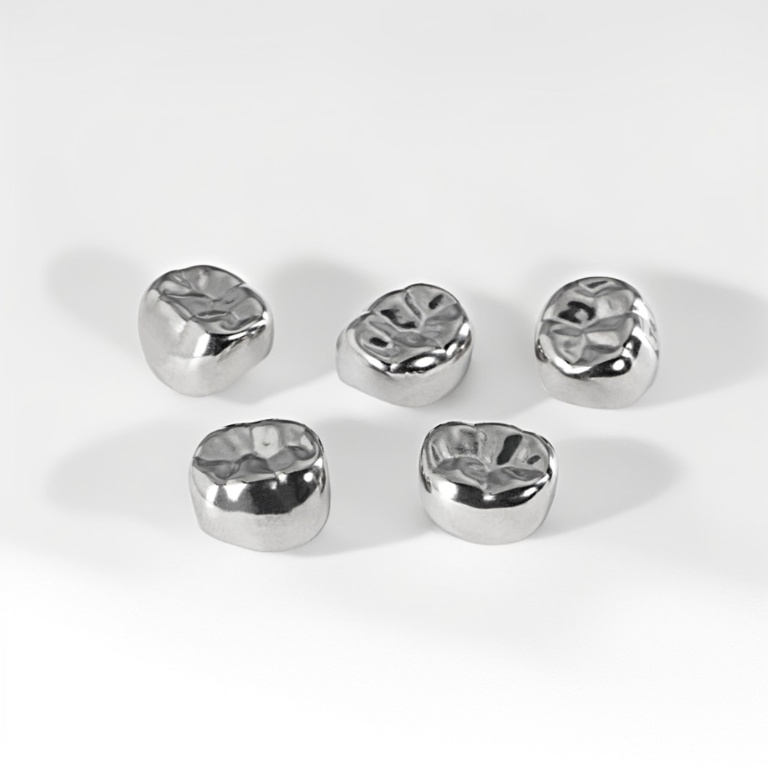
The most common reason your child may need a Hall Crown is due to tooth decay or cavities on baby teeth. Decay can occur because of diet, oral hygiene habits, or natural developmental factors affecting the enamel.
Other possible reasons include:
You may notice one or more of these symptoms:
Even if not every hypomineralised tooth needs a crown, your dentist will carefully assess the tooth’s health to determine if a Hall Crown is appropriate.
Your dental professional will first perform a comprehensive dental examination to assess your child’s oral health. This may include taking X-rays and doing a professional dental clean if needed.
The dentist will assess whether the decay has reached the pulp (nerve) of the tooth.
Hall Crowns are only suitable when:
Once the tooth is confirmed suitable, the procedure and its benefits are discussed and consented to with you and your child.
Small rubber separators are placed between the teeth on either side of the one being treated.
After placement:
Because of their minimally invasive nature, Hall Crowns can usually be done without anaesthetic and are well tolerated even by very young children. This approach can prevent the need for more extensive treatment later on.
To keep your child’s crown and teeth healthy:
If you’re interested in a Hall Crown in Keysborough, we invite you to visit Dental at Keys for a personalised consultation.
Yes. Stainless Steel Crowns are made from medical-grade metal alloys that are perfectly safe for children. They are durable, biocompatible, and designed specifically for use inside the mouth.
Once a cavity becomes moderately large, fillings tend to fail more easily in baby teeth. The bonding materials used for fillings don’t adhere as strongly to primary teeth, and as teeth move or erupt, fillings can loosen or fall out.
Stainless Steel Crowns provide greater protection and longevity, helping to preserve baby teeth until they naturally fall out.
We like to make it fun! We often call it a “superhero tooth” or a “robot tooth.” Many children love showing off their special new tooth — and usually realise that some of their friends have them too.
The Teeth Space maintainers we do in Keysborough are custom-made dental appliances used to hold open the space left by a prematurely lost tooth—most commonly in children. As your dentist in Keysborough, we can help your teeth space with a tooth space maintainer.
Teeth space maintainers can be fixed or removable. They ensure adequate space for the erupting adult tooth and help prevent future orthodontic problems. Most space maintainers we do in Keysborough are done in children, however, adults may also benefit from space maintainers. Space maintainers are done to preserve the gap until a dental implant, bridge, or denture is placed in adults.
Read on to learn more about how we can help you with teeth space maintainers in Keysborough.
When a deciduous (baby) tooth falls out early, the adult (permanent) tooth underneath may not be ready to erupt. Without a space maintainer, surrounding teeth can shift into this space, leading to crowding or misalignment. This often results in the adult tooth erupting in the wrong position or becoming impacted (Stuck). In the lower or upper jaw, these changes can also affect the bite and the alignment of opposing teeth.
If an adult tooth is lost and isn’t replaced promptly (with an implant, bridge or plate), a space maintainer may be used to preserve the space and prevent neighbouring teeth from drifting.
Several factors influence whether your child may need a space maintainer:
There are 2 main types of Space Maintainers we can do as your Keysborough Dentist: fixed Space Maintainers and removable Space Maintainers. The fixed Space Maintainers are the most common as they are the most effective and compliance is high because the child cannot remove it. The efficacy of removable Space Maintainers often suffer because children often remove them.
The best way to avoid needing a space maintainer is through preventive dental care. Regular dental check-ups, fluoride treatments, proper brushing and flossing, and a tooth-friendly diet help protect baby teeth from decay. In the case of sports injuries, a custom mouthguard can help protect your child’s teeth from trauma.
Book an appointment to see if space maintainers are the right option for your child.
Costs vary depending on the type.
Band and Loop: From $350+ (includes eventual removal).
Removable options: From $260+.
Custom devices often require dental impressions or digital scans and may involve lab fabrication.
Removal occurs when the adult tooth begins to erupt or if the appliance becomes uncomfortable. This is assessed during regular dental visits.
Initial fitting might feel tight or strange but shouldn’t be painful. Children typically adjust within a few days.
A dental professional will gently remove it by detaching the bands or wires—this is quick and usually doesn’t require anesthesia.
Brush thoroughly around the appliance.
Use floss or interdental brushes to clean hard-to-reach areas.
Avoid sticky or chewy foods that can dislodge the device.